KNEE CONDITIONS & TREATMENTS > OSTEOARTHRITIS
LEARN ABOUT YOUR KNEE
Osteoarthritis & Knee Replacements
A guide to knee arthritis and exploring treatment options.
Book a consultation with Dr Jon Liew to talk about your knee.
GENERAL INFORMATION
What is osteoarthritis?
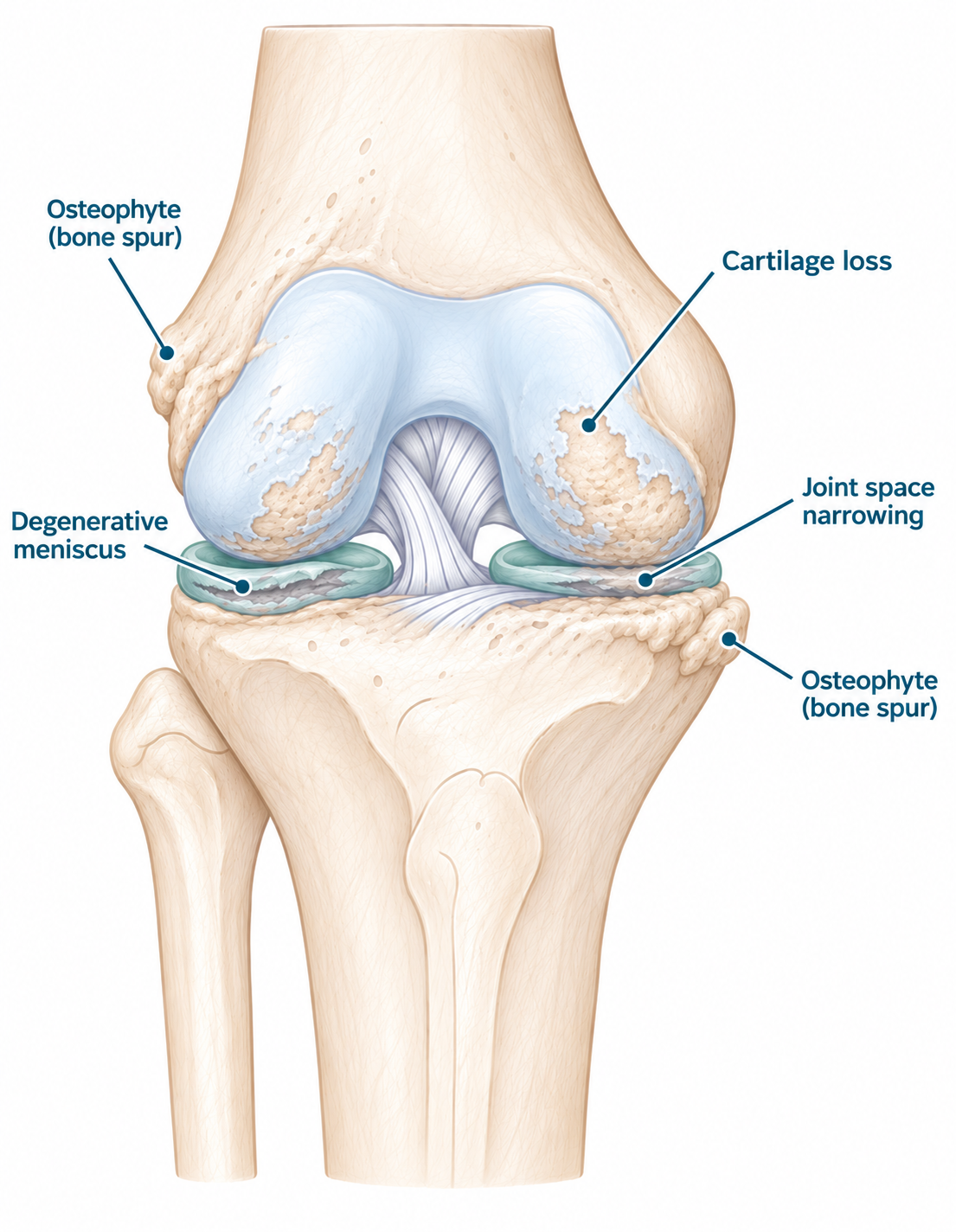
Arthritis refers to inflammation and degeneration of a joint. There are several different types of arthritis, with osteoarthritis being the most common. Osteoarthritis involves progressive degeneration of the joint cartilage and underlying bone. It can develop as part of the normal ageing process, but may also occur earlier in life due to a combination of genetic, biological and mechanical factors, including previous injuries, ligament instability, meniscal damage or abnormal alignment of the knee.
There are several ways to manage osteoarthritis, and having arthritis does not automatically mean you need surgery. Treatment often begins with exercise, strengthening, weight management where appropriate, and strategies to manage pain. When symptoms continue to significantly affect your quality of life, knee replacement may be worth considering.
SUPPORT GUIDE
I have arthritis!
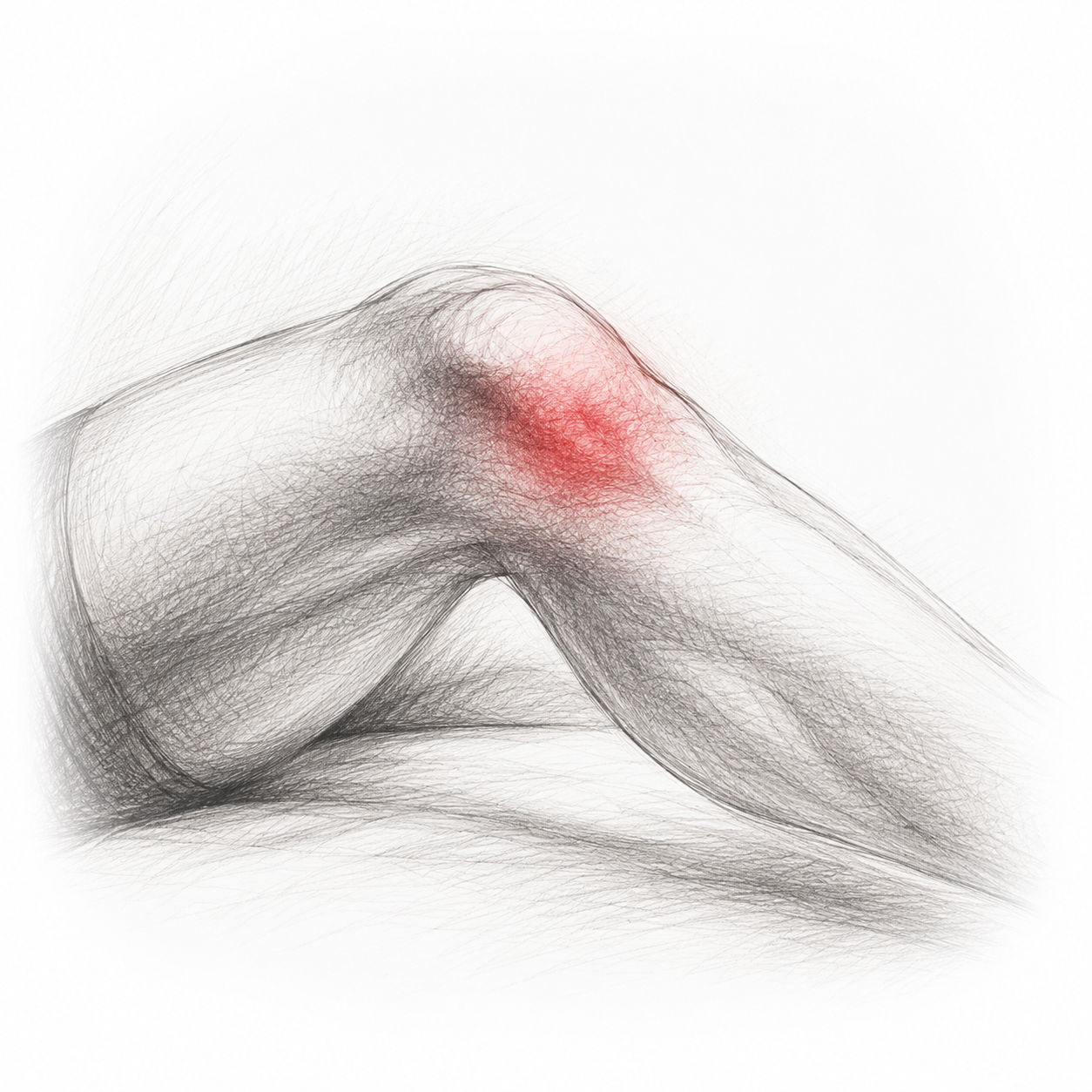
Osteoarthritis commonly causes pain, stiffness and swelling in the knee. Pain may initially occur with activities such as walking, running, climbing stairs or prolonged standing, and may gradually become more persistent.
You may notice stiffness when first getting up after sitting or in the morning, as well as reduced knee movement. Some people experience clicking, grinding or a sensation that the knee is not moving smoothly.
As arthritis progresses, everyday activities may become increasingly difficult and pain may begin to interfere with sleep, work, exercise and quality of life.
Read more about osteoarthritis and treatment options below ↓
Why does osteoarthritis develop?
Several factors can contribute, including:
Increasing age and inherited susceptibility
Previous knee injuries, including fractures or ligament injuries
Previous meniscal damage or removal
Increased body weight
Leg alignment that places more load through one part of the knee
There is often no single cause. Some people develop significant arthritis without a previous injury, while others develop it years after damage to the knee.
Osteoarthritis is different from inflammatory conditions such as rheumatoid arthritis, which may require additional medical treatment.
Which parts of the knee can be affected?
The knee has three main compartments:
Medial compartment: The inner side of the knee, between the thighbone and shinbone. This is a common location for osteoarthritis.
Lateral compartment: The outer side of the knee, between the thighbone and shinbone.
Patellofemoral compartment: The joint between the kneecap and the front of the thighbone. Arthritis here may cause discomfort with stairs, squatting or getting up from a chair.
Osteoarthritis may affect one compartment or several. The pattern of arthritis helps guide treatment, particularly when considering whether a partial or total knee replacement may be appropriate.
Symptoms
Common symptoms include:
Pain with walking, standing or stairs
Stiffness after sitting or first thing in the morning
Swelling that comes and goes
Difficulty fully bending or straightening the knee
Grinding or crunching sensations
Reduced walking distance
A feeling of weakness or giving way
Changes in leg alignment, such as becoming more bow-legged
More advanced arthritis may cause pain at rest or disturb sleep. However, the amount of pain does not always match the severity of arthritis seen on an X-ray.
OSTEOARTHRITIS
Assessment and Treatment Options
Your consultation includes a discussion about your symptoms, previous injuries, treatments and general health. I will examine your knee movement, stability, swelling and leg alignment, and consider whether another problem may be contributing to your pain.
When imaging is needed, standing X-rays are usually the most useful starting point. They help show the joint space and the distribution of arthritis under load.
An MRI is not routinely necessary for established osteoarthritis. It may be helpful when symptoms are unusual or another diagnosis is suspected.
What are the treatment options?
Treatment depends on the severity of arthritis, your symptoms, activity level and overall health.
Non-operative management is effective for many patients, particularly in the earlier stages of arthritis. The aim is to relieve pain, maintain strength and function, and allow you to remain as active as possible.
Surgery is generally reserved as a last resort, when symptoms significantly affect your quality of life despite appropriate non-operative treatment.
Treatment is individualised. The most appropriate approach depends on how your knee is affecting your everyday life, rather than the appearance of the joint alone.
OSTEOARTHRITIS
OSTEOARTHRITIS
Non-operative treatment
The aim of non-surgical treatment is to manage pain, maintain movement and help you stay active. Exercise, education and weight management are central parts of osteoarthritis care.
Exercise and physiotherapy
An individualised exercise program can improve strength, movement and function. This may include strengthening the thigh and hip muscles, improving flexibility and participating in low-impact activities such as cycling, swimming or walking.
Activity modification
Adjusting the duration, intensity or type of activity can help reduce symptoms. Avoiding activities that aggravate your knee, while gradually building up your activity levels, can help you remain active without causing unnecessary discomfort.
Weight management
For patients carrying excess weight, weight loss can significantly reduce the load on the knee and improve symptoms. This is best approached through a combination of dietary changes and regular exercise.
Pain relief
Anti-inflammatory gels and selected oral medications may help manage symptoms. The most appropriate medication depends on your medical history, particularly if you have kidney, heart or stomach problems.
Walking aids and braces
A walking stick or specialised unloading brace may help some patients by reducing stress on the affected part of the knee.
Can injections help?
Injections may provide symptom relief in selected circumstances, although they do not reverse established arthritis.
Corticosteroid injections can provide temporary pain relief, particularly during a painful flare. The response varies between patients, and the benefits are generally short term. Occasionally, an injection may also help you participate more comfortably in rehabilitation.
Other injections, including hyaluronic acid, platelet-rich plasma (PRP) and treatments marketed as regenerative injections, are sometimes offered. However, the evidence supporting their effectiveness is limited or inconsistent, and none has been proven to regrow normal joint cartilage. Many clinical guidelines do not recommend their use.
When to consider surgery
The decision to proceed with surgery is based primarily on your symptoms and their impact on your quality of life, rather than the appearance of your knee on an X-ray alone.
Surgery may be considered when appropriate non-operative treatments have not provided sufficient relief. Three important signs that it may be time to discuss surgery include:
Pain that regularly interrupts your sleep
Persistent and severe pain
Pain and stiffness that limit everyday activities and stop you from enjoying life
Other factors include the severity and location of arthritis, the alignment and stability of your knee, your age, activity level and personal goals.
Depending on your individual circumstances, surgical options may include:
Osteotomy: Realigning the leg to redistribute weight through the less affected side of the knee, potentially delaying the need for a knee replacement.
Partial knee replacement: Replacing the affected compartment while preserving the remaining healthy parts of the knee.
Total knee replacement: Replacing the joint surfaces when arthritis is more widespread.
Keyhole surgery (knee arthroscopy) is generally ineffective for treating arthritis itself, although it may occasionally be appropriate for a separate mechanical problem, such as a displaced meniscal tear causing true locking.
Although knee replacements can provide substantial and lasting improvements in pain and function, it does not restore a completely normal knee. The replacement may feel different, complications can occur, and the original joint surfaces cannot be restored once removed. For these reasons, I consider knee replacement a last resort.
My aim is to recommend the least invasive treatment that can reliably improve your symptoms, while preserving as much of your natural knee as possible.
OSTEOARTHRITIS
OSTEOARTHRITIS
-
No. It describes advanced cartilage loss, but surgery is based on how much your symptoms affect you, your examination and whether other treatments provide adequate relief. Some people with severe X-ray changes still function very well.
-
No, keeping moving! Exercise has been shown at helping to relieve symptoms, but may need to be adjusted during a flare.
-
Degenerative meniscal tears almost always occur alongside osteoarthritis. The tear may be part of the overall joint changes rather than the main cause of pain. Treatment usually focuses on the symptoms and the condition of the whole knee.
Frequently Asked Questions (FAQ)
SURGERY
What is a knee replacement
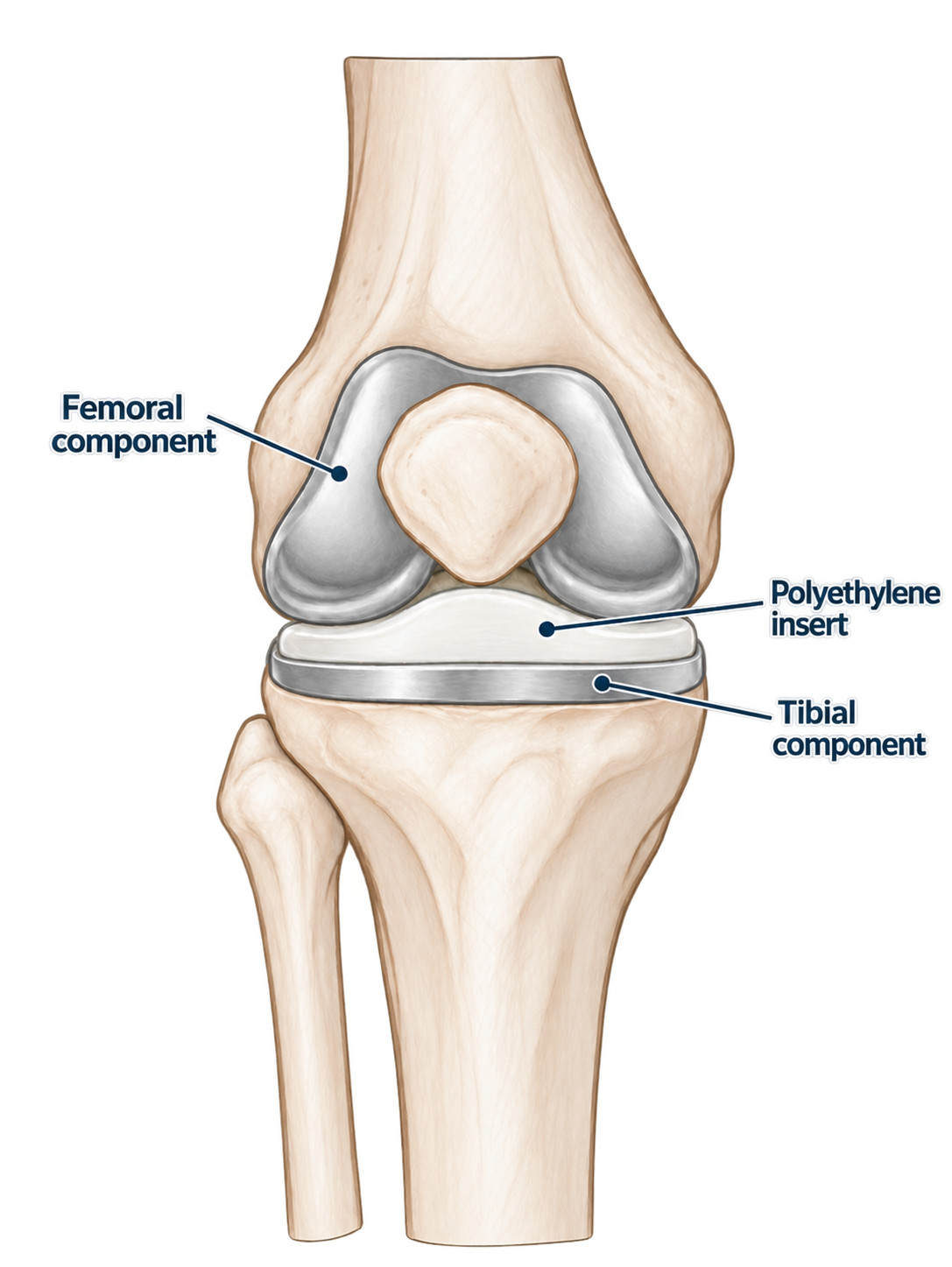
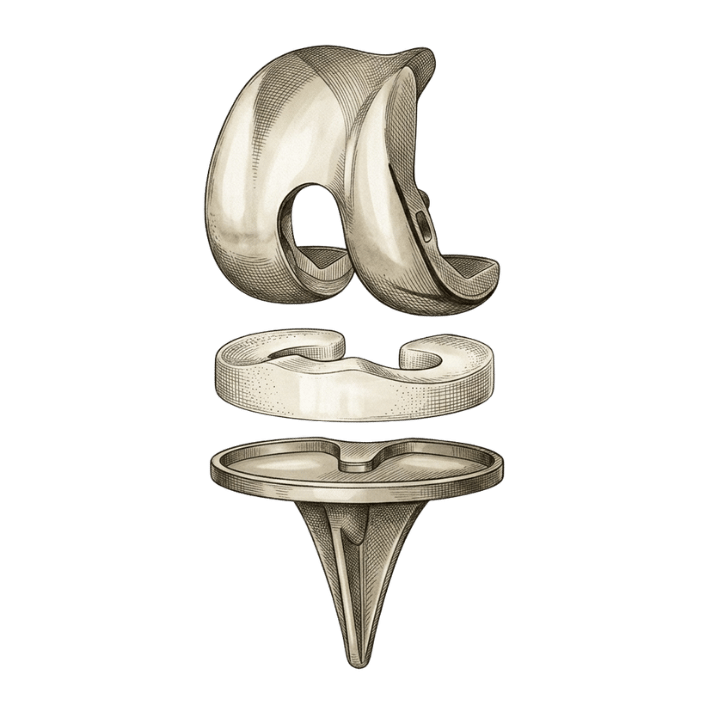
A knee replacement is an operation that replaces the damaged surfaces of the knee with artificial components to reduce pain and improve movement. Only the worn cartilage and underlying bone is removed. It is also called ‘arthroplasty’ surgery - ‘artho’ meaning joint and ‘plasty’ meaning to remodel or reform.
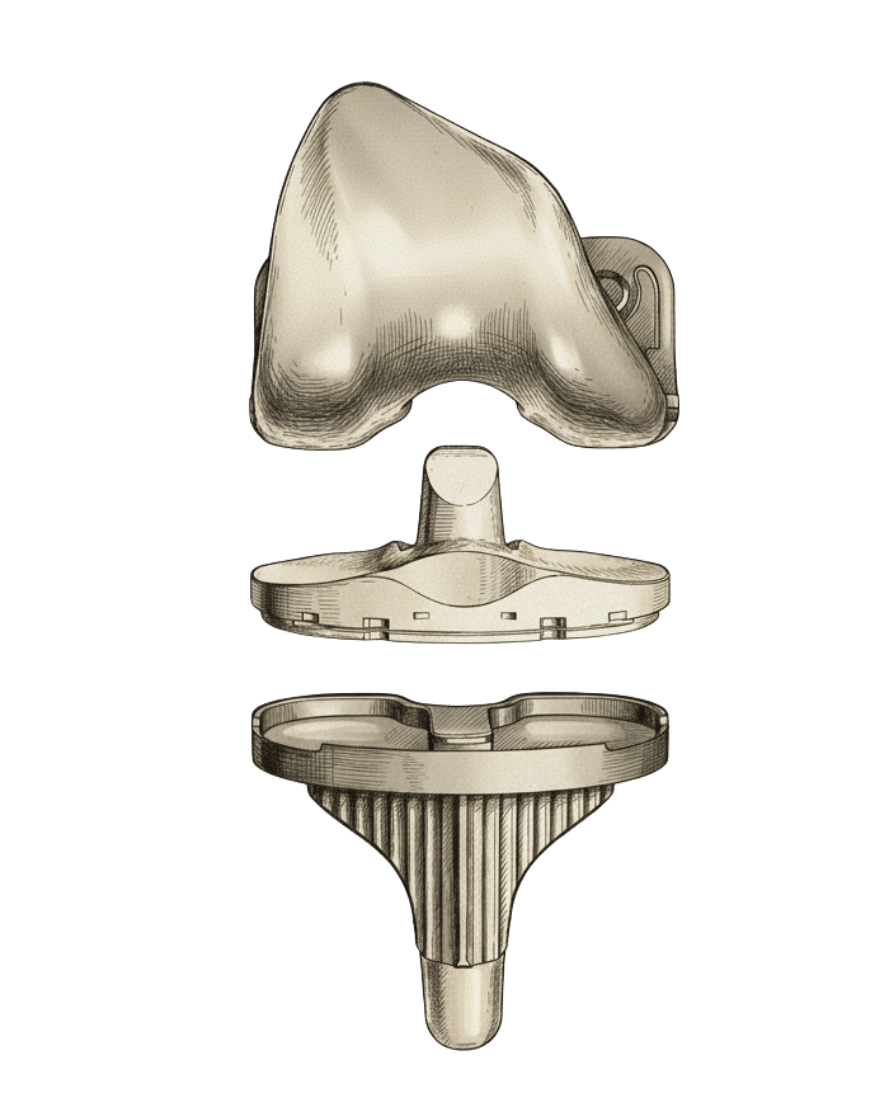
The implants are made from metal alloys, commonly cobalt-chromium or titanium, and a durable medical-grade plastic called polyethylene. Metal components cover the prepared bone surfaces, with the plastic insert between them to allow smooth movement. The undersurface of the kneecap may also be resurfaced with a plastic with/without metal component.
KNEE REPLACEMENT AT A GLANCE
Operation
Total or partial knee Replacement
Anaesthetic
Spinal or general anaesthesia, often with additional local or regional pain relief
Hospital stay
Usually around 3 days, but this varies significantly.
Weight bearing
Usually immediately as tolerated, but slowly and with a walking aid
Knee brace
Not routinely required
Pain
Usually takes several months to improve
Rehabilitation
Begins early and continues for many months
Return to work
Schedule 6 weeks off desk work but can work remotely sooner
SURGERY
Types of knee replacement
Total knee replacement
A total knee replacement involves resurfacing the main joint surfaces of the knee, including the medial (inner) and lateral (outer) compartments, as well as the trochlea (the groove at the end of the femur where the patella glides). The cartilage on the underside of the patella may also be replaced.
The operation also involves carefully assessing and adjusting the alignment, movement and soft-tissue balance of the knee to achieve a stable, well-functioning joint.
Partial knee replacement
A partial knee replacement involves resurfacing only the affected compartment, while preserving the healthy parts of the knee.
It may be suitable when arthritis is limited to one area and the remaining cartilage and ligaments are in good condition. In appropriately selected patients, advantages can include a smaller operation, faster early recovery and a more natural-feeling knee.
However, arthritis may eventually develop in the remaining compartments, potentially requiring further surgery. Partial knee replacement is therefore an excellent option for select patients, but is not suitable for every knee.
SURGERY
Preparing for surgery
Good preparation can help make your surgery and recovery as smooth as possible. This begins with understanding the operation, optimising your health and planning for your recovery.
Preparation may include:
A medical and anaesthetic assessment to manage any medical conditions that could affect the surgery, including reviewing your medications and making any necessary changes
Prehabilitation: Exercises to improve leg strength, knee movement and general fitness before surgery to help with your post-op recovery
Planning transport, meals and support at home after surgery
Understanding what to expect regarding wound care, pain relief and rehabilitation
Prehabilitation is an important part of preparing for knee replacement surgery. Your physiotherapist can help develop an exercise program suited to your abilities, giving you a good foundation for recovery.
Please also let your treating team know about any recent knee injections, skin wounds or infections before your operation.
Recovery and rehabilitation
Recovery following knee replacement is gradual, and progress can vary from day-to-day and from week-to-week.
Immediately after surgery: The focus is on pain control, gentle exercises and getting you walking safely with an aid and/or assistance . The physiotherapist will help you practise the movements and exercises needed for discharge.
The first few weeks: The priorities are wound healing, reducing swelling, restoring knee movement and gradually returning to everyday activities. A walking aid is commonly still required.
The following months: Strength, endurance and walking tolerance continue to improve as you gradually return to more demanding activities.
Your physiotherapist and surgical team will guide your recovery, helping you find the right balance between exercise and rest. Doing too much can aggravate swelling, while doing too little can delay the return of movement and strength.
SURGERY
SURGERY
Risks of surgery
Knee replacements are generally safe, although complications can occur. Most patients recover without serious problems.
Potential risks include:
Infection (approximately 1%): Infection around the implant can be serious and may require further surgery.
Bleeding: Some blood loss is expected during surgery, but occasionally a blood transfusion may be required.
Blood clots (approximately 5%): Clots can form in the legs (DVT) and occasionally travel to the lungs (pulmonary embolism).
Stiffness (approximately 5%): Some patients develop significant stiffness requiring further treatment or manipulation under anaesthesia. The best predictor for how much movement you will have in the knee after surgery, is the amount of movement you had prior to the surgery.
Persistent pain (approximately 10–25%): A small proportion of patients continue to experience troublesome pain or dissatisfaction despite a technically successful operation.
Nerve or blood vessel injury (less than 1%): These injuries are rare but can cause lasting problems.
Implant wear or loosening: This can occur over time and may eventually require further surgery.
Fracture: Fractures can occur during surgery or around the implant following surgery. These can be complex to treat and may require further surgery.
Instability: Some patients may experience a feeling of looseness or instability in the knee, which can affect confidence and function. Occasionally, further surgery may be required.
Other risks include medical or anaesthetic complications, such as heart or lung problems.
Your individual risk depends on your age, general health and other medical conditions. We will discuss the risks relevant to you and the measures taken to minimise them before surgery.
GENERAL INFORMATION
-
Whilst there is no age restriction, it is one consideration, alongside symptoms, health and likely benefit. Younger patients need to consider the higher chance of needing repeat (revision) surgery. For older patients, medical fitness and recovery support are particularly important.
-
Not necessarily. Your discharge plan depends on safe mobility, your home environment, available support and medical needs. Some people recover at home with physiotherapy, while others benefit from additional time in hospital.
-
You need sufficient movement, strength and reaction time to control the car and perform an emergency stop safely. You must also be free from the effects of sedating pain medication. Timing depends on the operated side, vehicle and recovery. Usually 6 weeks from surgery.
-
Knee replacements are intended to function for many years, but there is no guaranteed lifespan. Implant wear, loosening, infection and other problems can sometimes require more surgery. Most knee replacement last at least 15-20 years if not longer.
-
Many people return to walking, swimming, cycling, golf and lawn bowls. Low-impact activities are generally preferred.
Social tennis, hiking and controlled gym exercises may also be suitable, depending on your previous experience, strength and recovery.
Running, jumping and high-impact or contact sports, such as football, basketball and squash, are generally discouraged because of concerns about injury and implant wear.
-
Possibly. Kneeling is generally safe after a knee replacement and does not usually damage the implant.
However, many patients find kneeling uncomfortable, particularly due to tenderness or altered sensation around the scar. About 50-60% of patients have issues with kneeling.
Frequently Asked Questions (FAQ)
HOW I CAN HELP
Surgical procedures I offer for osteoarthritis, when clinically appropriate:
Robotic-assisted Total Knee Replacement
Robotic-assisted Partial (Unicompartmental) Knee Replacement
Realignment surgery (Osteotomy)

CONTACT US
Make some time for you and your knee
Dr Jon Liew consults at the San Clinic (Wahroonga) on Sydney’s Upper North Shore.