KNEE CONDITIONS & TREATMENTS > CARTILAGE INJURIES
LEARN ABOUT YOUR KNEE
Cartilage Injuries
Understanding damage to the knee’s joint surface and the options for treatment.
Book a consultation with Dr Jon Liew to talk about your knee.
Cartilage Injuries
ON THIS PAGE
GENERAL INFORMATION
What is cartilage?
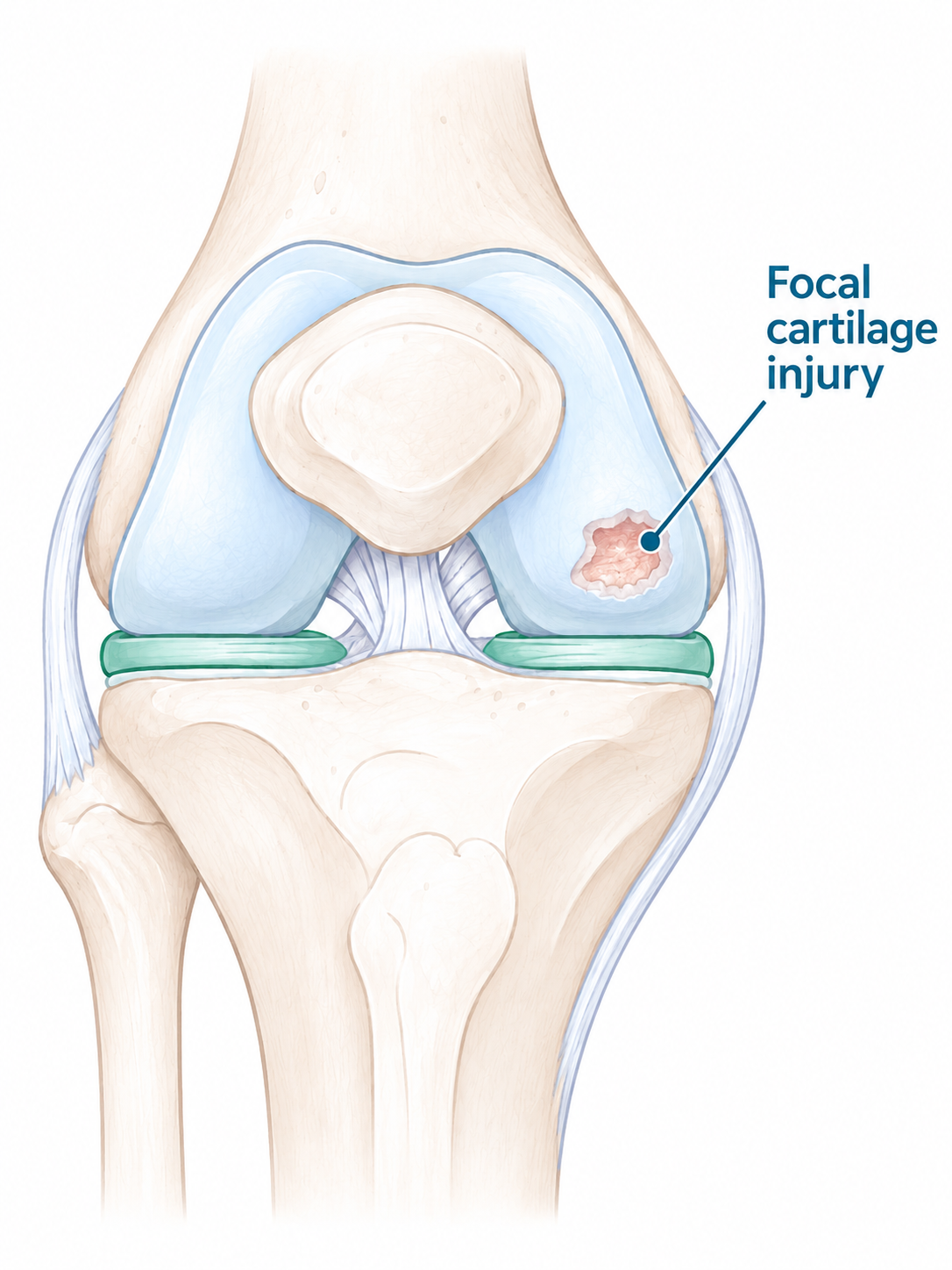
Articular cartilage covers the ends of the bones within the knee, allowing smooth movement and helping to absorb and distribute load. It can be damaged following an acute injury, such as a twisting or impact injury, or gradually deteriorate. Damaged cartilage has a very limited ability to heal itself.
Cartilage injuries can range from a small, localised defects to more extensive cartilage loss affecting the entire joint, commonly associated with osteoarthritis.
CARTILAGE
Types of Cartilage Injury
Cartilage injuries can vary in their size, depth and location. They may involve softening or roughening of the cartilage (chondromalacia), partial-thickness damage or full-thickness defects where the underlying bone is exposed. Some injuries also involve the bone beneath the cartilage, known as osteochondral injuries.
Cartilage damage can occur following an acute injury or develop gradually through wear and degeneration. The type and extent of damage help guide treatment options.
CARTILAGE
Treatment Options
Treatment depends on the size and location of the defect, your age, activity level and the condition of the rest of the knee. Not all cartilage injuries require surgery.
Non-surgical treatment
Treatment often begins with adjusting activities, physiotherapy and appropriate pain relief. Strengthening and weight management, where relevant, can reduce the load on the affected area.
Although cartilage has limited ability to heal naturally, symptoms can often improve without surgery.
Surgical treatment
Surgery may be considered for persistent symptoms, loose cartilage fragments causing catching or locking, or certain focal cartilage defects in an otherwise healthy knee. Options depend on the defects size, depth and location, together with the condition of the rest of the knee.
If the injured cartilage has become loose within the knee joint, causing issues and is not reparable, an arthroscopy (keyhole surgery) may be required to remove the fragment(s).
Chondroplasty is another arthroscopic procedure where any unstable cartilage edges are trimmed and smooth. This may relieve symptoms but does not replace the missing cartilage.
In very specific patients with a focal cartilage defect in an otherwise healthy knee, cartilage restoration procedures may be considered. For example, an OATS procedure transfers small plugs of healthy cartilage and underlying bone from a less important area of the knee to the area of cartilage damage.
Widespread cartilage loss associated with arthritis is managed differently (see Osteoarthritis).
Associated problems such as meniscal deficiency, limb malalignment or ligament instability usually also need to be addressed to give cartilage treatment the best chance of success.
CARTILAGE
-
Not exactly. Cartilage damage leads to arthritis, but not all cartilage damage is associated with arthritis.
An important distinction is whether the damage is a cartilage injury affecting a specific localised area (usually associated with a single traumatic injury) or osteoarthritis, which involves broader changes throughout the joint and occurs over time. -
No injection has been proven to regrow normal joint cartilage. Some injections may help symptoms.
-
No. Treatment is guided by symptoms and function. A defect found incidentally on MRI may not need an operation.
-
Generally, no, although the answer is more nuanced. Several factors need to be considered, including the likelihood of improvement without surgery, the size and location of the cartilage defect, your age and activity level, and the potential consequences of leaving the injury untreated.
Every procedure has its own risks and benefits. My approach is to recommend surgery only when I believe there is a reasonable chance of success, taking into account each individual situation.
Frequently Asked Questions (FAQ)
HOW I CAN HELP
Surgical procedures I offer for cartilage injuries, when clinically appropriate:
Knee Arthroscopy
Chondroplasty
Osteochondral fixation
Cartilage transfer procedure (OATS)
CONTACT US
Make some time for you and your knee
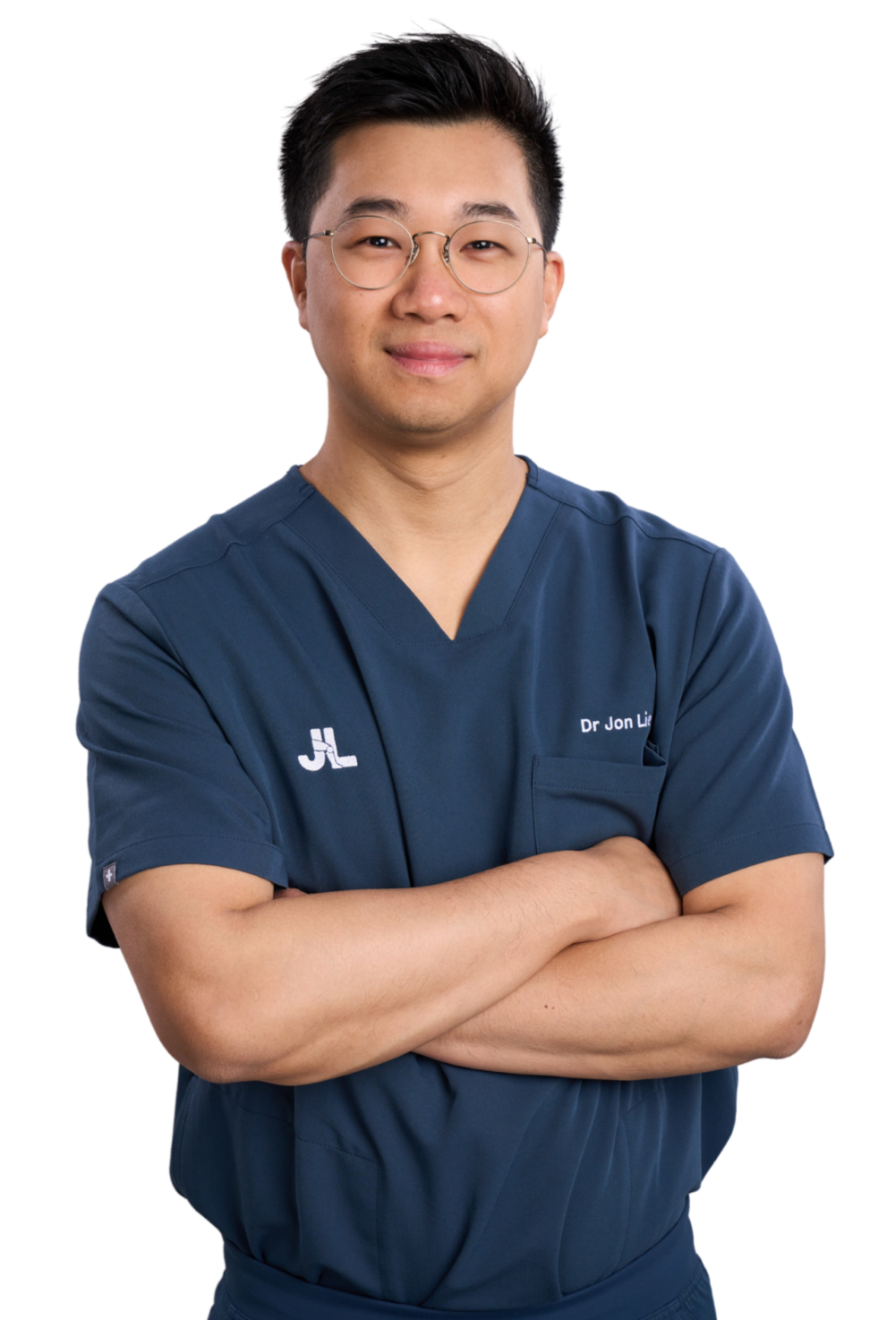
Dr Jon Liew consults at the San Clinic (Wahroonga) on Sydney’s Upper North Shore.